
 1 hari yang lalu
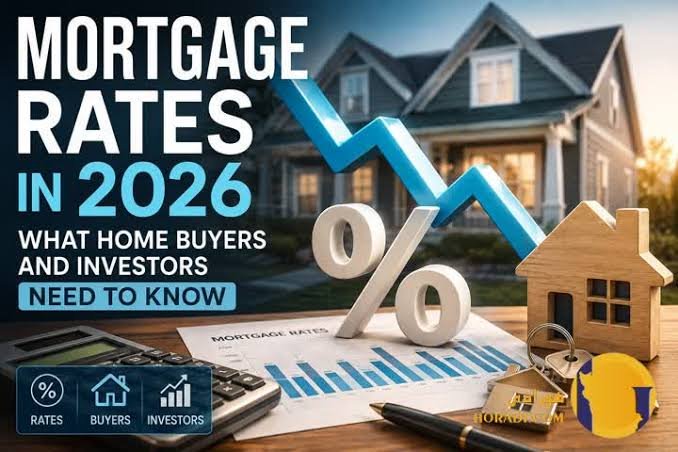
Mortgage Rates in the USA in 2026: What Homebuyers Need to Know
Introduction
Mortgage rates are among the most important factors influencing the cost of buying a home in the United States. Whether you are purchasing your first property, upgrading to a larger house, or refinancing an existing mortgage, the interest rate on your home loan can significantly affect your monthly payment and the total amount you pay over time.
In 2026, homebuyers continue to pay close attention to mortgage rates as they evaluate affordability and decide when to enter the housing market. Even a small difference in interest rates can change a household's monthly budget, especially when financing a property over 15 or 30 years.
However, mortgage rates are not determined by a single factor. They are influenced by broader economic conditions, financial markets, lender policies, inflation expectations, credit scores, down payments, and individual borrower circumstances.
Understanding how mortgage rates work can help you make better financial decisions. Instead of focusing only on advertised rates, it is important to compare annual percentage rates (APR), closing costs, loan terms, and the total cost of borrowing.
This guide explains mortgage rates in the USA in 2026, explores the main types of home loans, discusses the factors that influence interest rates, and provides practical strategies for finding a competitive mortgage offer.
What Are Mortgage Rates?
A mortgage rate is the interest percentage a lender charges a borrower for financing a home purchase or refinancing an existing home loan.
When you take out a mortgage, you agree to repay the borrowed principal along with interest over a specified period.
For example, imagine borrowing $350,000 to purchase a home. If your mortgage has a fixed interest rate of 6.5% over 30 years, the interest rate is applied to the outstanding loan balance according to the loan's repayment schedule.
The interest rate directly affects your monthly principal and interest payment. A higher rate generally means a higher monthly payment and more interest paid over the life of the loan.
Mortgage rates are usually expressed as annual percentages. However, the rate you receive depends on the type of mortgage, lender, property, and your financial profile.
It is also important to distinguish between a mortgage interest rate and APR.
Mortgage Interest Rate vs. APR
The mortgage interest rate determines how much interest you pay on the outstanding loan balance.
The annual percentage rate, or APR, provides a broader measure of borrowing costs. It incorporates the interest rate and certain loan-related charges, expressed as an annualized percentage.
For example, two lenders may advertise the same interest rate but offer different APRs because their fees and loan structures differ.
When comparing mortgage offers, consider both figures rather than selecting a lender based only on the advertised interest rate.
Types of Mortgage Rates in the USA
American homebuyers can choose from several mortgage structures. The most common options include fixed-rate mortgages and adjustable-rate mortgages.
1. Fixed-Rate Mortgages
A fixed-rate mortgage has an interest rate that remains unchanged throughout the agreed loan term.
This means the principal and interest portion of your monthly payment generally stays the same, making long-term budgeting easier.
The most common fixed-rate mortgage terms are:
30-year fixed mortgage
20-year fixed mortgage
15-year fixed mortgage
10-year fixed mortgage
A 30-year fixed mortgage spreads repayment over a longer period. It generally offers lower monthly principal and interest payments than a shorter-term loan with the same balance and interest rate.
A 15-year fixed mortgage usually has higher monthly payments but allows borrowers to repay the principal faster and may result in less total interest over the life of the loan.
Advantages of fixed-rate mortgages:
Predictable principal and interest payments
Protection from future increases in market interest rates
Easier long-term financial planning
Suitable for borrowers who value payment stability
Potential disadvantages:
Initial interest rates may be higher than some adjustable-rate alternatives
Borrowers may pay more total interest with longer repayment terms
Refinancing may involve additional costs if rates fall later
A fixed-rate mortgage can be attractive for people planning to remain in their homes for many years.
2. Adjustable-Rate Mortgages (ARMs)
An adjustable-rate mortgage has an interest rate that can change over time according to the loan's terms.
Many ARMs begin with an introductory period during which the initial interest rate remains fixed. After that period ends, the rate adjusts periodically based on a specified financial index and lender margin.
Common examples include:
5/1 ARM
7/1 ARM
10/1 ARM
A 5/1 ARM generally has an initial fixed-rate period of five years, followed by adjustments once per year. The actual adjustment structure depends on the loan agreement.
ARMs often include rate caps that limit how much the interest rate can increase at certain intervals or over the life of the loan.
Advantages of adjustable-rate mortgages:
Potentially lower initial interest rates
Lower initial payments in some market conditions
May suit borrowers expecting to move or refinance before the adjustment period
Potential disadvantages:
Monthly payments can increase after the initial period
Future interest costs are less predictable
Borrowers may face payment pressure if rates rise substantially
An ARM should not be selected solely because its initial rate is lower. Before signing, understand the adjustment schedule, index, margin, and maximum possible interest rate.
What Determines Mortgage Rates in 2026?
Mortgage rates are influenced by a combination of economic, financial, and borrower-specific factors.
Understanding these factors can help explain why rates change and why different borrowers receive different offers.
1. Federal Reserve Monetary Policy
The Federal Reserve influences short-term interest rates through its monetary policy decisions.
When the Fed raises or lowers its policy rate, it can affect borrowing costs throughout the economy. However, mortgage rates do not move in perfect synchronization with the federal funds rate.
Long-term mortgage rates are also influenced by bond markets, inflation expectations, and investor demand.
As a result, mortgage rates may sometimes move differently from the direction people expect after a Federal Reserve announcement.
2. Inflation
Inflation is an important factor in long-term interest rate movements.
When investors expect inflation to remain elevated, they may demand higher returns on long-term investments. This can put upward pressure on Treasury yields and mortgage rates.
When inflation expectations decline, long-term borrowing costs may become more favorable, although other market factors still matter.
3. The 10-Year Treasury Yield
The 10-year U.S. Treasury yield is commonly used as a benchmark when analyzing long-term mortgage rate trends.
Mortgage rates do not directly equal Treasury yields. Instead, lenders price mortgages using additional factors, including market risk, servicing costs, and mortgage-backed securities pricing.
Nevertheless, movements in the 10-year Treasury yield can provide useful context for understanding changes in mortgage rates.
4. Credit Score
Your credit score can influence the mortgage rates and loan terms available to you.
Borrowers with stronger credit profiles may qualify for more competitive pricing than applicants with weaker credit histories.
Lenders may also review payment history, outstanding debts, and other information when evaluating creditworthiness.
Before applying, check your credit reports and correct any errors that could negatively affect your application.
5. Down Payment
The amount you contribute toward the purchase price can affect your mortgage terms.
A larger down payment reduces the amount you need to borrow and may improve the overall risk profile of the loan.
For conventional mortgages, putting down less than 20% generally results in private mortgage insurance unless an applicable exception or alternative loan structure applies.
However, a 20% down payment is not required for every mortgage program.
6. Loan Term
The repayment period can affect the interest rate offered by a lender.
For example, 15-year fixed mortgages often have lower interest rates than comparable 30-year fixed mortgages, although the actual difference varies with market conditions.
Shorter terms also mean higher monthly principal and interest payments because the balance must be repaid faster.
7. Property Type and Loan Amount
Mortgage pricing can vary based on whether the property is a primary residence, second home, or investment property.
The loan amount also matters. Jumbo mortgages, which exceed applicable conforming loan limits, may have different pricing and qualification requirements.
Lenders evaluate these details when determining the terms of a mortgage offer.
How Much Does a Mortgage Rate Affect Your Monthly Payment?
A small interest rate difference can create a meaningful change in monthly payments.
Consider a hypothetical $350,000 mortgage with a 30-year fixed term.
The following examples show approximate monthly principal and interest payments at different interest rates.
Interest rateApproximate monthly payment| 5.5% | $1,987 |
| 6.0% | $2,098 |
| 6.5% | $2,212 |
| 7.0% | $2,328 |
| 7.5% | $2,448 |
These figures are illustrative estimates. They exclude property taxes, homeowners insurance, mortgage insurance, homeowners association fees, and closing costs.
The comparison shows why it is important to evaluate the interest rate before accepting a mortgage offer.
A difference of one percentage point can change the monthly payment by hundreds of dollars, depending on the loan balance.
Over a long repayment period, the total interest difference can become substantial.
How to Get the Best Mortgage Rates in the USA
Although you cannot control the overall direction of the mortgage market, you can take steps to improve your chances of receiving a competitive loan offer.
1. Improve Your Credit Score
Credit history is one of the factors lenders consider when pricing mortgages.
Before applying, review your credit reports from the major credit reporting agencies.
Consider these steps:
Pay bills on time.
Reduce outstanding credit card balances.
Avoid unnecessary new credit applications.
Correct inaccurate information on credit reports.
Keep older accounts in good standing where appropriate.
Improving your credit profile may take time, so start before you plan to purchase a home.
2. Compare Multiple Mortgage Lenders
Do not assume your existing bank will provide the best mortgage offer.
Request quotes from several lenders, including:
National banks
Local banks
Credit unions
Online mortgage companies
Mortgage brokers
Compare offers using the same loan amount, repayment term, down payment, and property assumptions.
This makes it easier to identify meaningful differences.
3. Request a Loan Estimate
A Loan Estimate is a standardized document that lenders provide after receiving an application and the information required under applicable disclosure rules.
It outlines important mortgage details, including:
Interest rate
APR
Monthly principal and interest payment
Estimated closing costs
Estimated cash needed to close
Loan features and potential risks
Review the document carefully and ask questions about fees that you do not understand.
4. Consider Paying Discount Points
Mortgage discount points are upfront fees paid to reduce the interest rate on a home loan.
One discount point typically costs 1% of the loan amount, although lender pricing and the rate reduction vary.
For example, on a $350,000 mortgage, one point would cost $3,500.
Paying points may make sense if you expect to keep the mortgage long enough for the monthly savings to exceed the upfront cost.
However, paying points is not automatically beneficial. Calculate the break-even period before making a decision.
5. Choose an Appropriate Loan Term
The right mortgage term depends on your income, savings, monthly budget, and long-term plans.
A 30-year mortgage may provide more manageable monthly payments, while a 15-year mortgage may reduce total interest costs.
Do not choose a shorter repayment term simply to save interest if the larger monthly payment would place too much pressure on your household budget.
6. Consider Your Down Payment Carefully
A larger down payment may reduce your loan balance and improve some mortgage terms.
However, using all your available savings to increase the down payment can leave you without enough money for emergencies, maintenance, moving expenses, or unexpected costs.
Maintain a reasonable financial reserve after purchasing a home.
Should You Lock Your Mortgage Rate?
A mortgage rate lock is an agreement that protects a quoted interest rate for a specified period while your loan moves through the approval process.
If market rates increase during the lock period, your locked rate generally remains unchanged, subject to the agreement's conditions.
If rates decline, however, you may not automatically receive the lower rate.
Some lenders offer a float-down option that may allow borrowers to benefit from a rate reduction under specific conditions.
Before locking your rate, ask the lender:
How long does the rate lock last?
Is there a fee?
What happens if closing is delayed?
Can the rate be extended?
Is a float-down option available?
What conditions could invalidate the lock?
A rate lock can provide certainty during the homebuying process, but the right timing depends on your closing schedule and financial priorities.
Mortgage Rates and Refinancing in 2026
Refinancing involves replacing an existing mortgage with a new loan.
Homeowners may refinance to pursue a lower interest rate, change their repayment term, move from an adjustable-rate mortgage to a fixed-rate loan, or access home equity through a cash-out refinance.
However, refinancing involves costs.
Common expenses may include:
Lender origination fees
Appraisal fees
Title and settlement charges
Credit report fees
Recording charges
Other applicable closing costs
How to Calculate the Break-Even Point
The break-even point helps homeowners estimate how long it may take for refinancing savings to recover the upfront costs.
For example:
Estimated refinancing costs: $4,000
Monthly payment savings: $200
Break-even calculation:
$4,000 ÷ $200 = 20 months
In this simplified example, it would take approximately 20 months to recover the refinancing costs through monthly payment savings.
This calculation does not account for changes in loan duration, taxes, or the total interest paid over the life of the new mortgage.
If you expect to sell the home before reaching the break-even point, refinancing may not provide the financial benefit you expect.
Common Mortgage Rate Mistakes to Avoid
Many homebuyers focus too heavily on the advertised interest rate and overlook other important details.
Avoid these common mistakes:
Ignoring APR: The interest rate alone does not show every borrowing cost.
Choosing a lender without comparing offers: A single quote may not reflect the best available terms.
Assuming rates will definitely fall: Mortgage market movements are difficult to predict accurately.
Ignoring adjustable-rate risks: A low introductory rate can increase after the initial fixed period.
Paying discount points without calculating the break-even period: Upfront costs may not be worthwhile if you sell or refinance too soon.
Overlooking closing costs: A competitive rate can still come with expensive fees.
Borrowing more than your budget allows: Approval for a particular loan amount does not necessarily mean that amount is financially comfortable.
Frequently Asked Questions (FAQs)
1. What are mortgage rates in the USA in 2026?
Mortgage rates change frequently and vary by lender, loan type, borrower profile, and market conditions. To obtain an accurate rate, request a personalized quote and compare current Loan Estimates from several lenders.
2. What is a good mortgage rate in 2026?
A good mortgage rate depends on current market conditions and the borrower's financial profile. Compare your personalized offers with recent national averages for the same mortgage type and term rather than relying on a single advertised rate.
3. Are 30-year mortgage rates higher than 15-year rates?
Thirty-year fixed mortgages often have higher interest rates than comparable 15-year loans. However, the 30-year term generally has lower monthly principal and interest payments because repayment is spread over a longer period.
4. Will mortgage rates go down in 2026?
Mortgage rates are influenced by inflation, Treasury yields, economic data, investor expectations, and lender pricing. No one can reliably guarantee that rates will fall during a specific period.
5. Should I choose a fixed-rate or adjustable-rate mortgage?
A fixed-rate mortgage may suit borrowers who prioritize predictable payments. An adjustable-rate mortgage may appeal to borrowers who understand the adjustment risks and expect to move or refinance before future rate changes. Compare the full loan terms before deciding.
6. Does a higher credit score lower mortgage rates?
A stronger credit profile can help borrowers qualify for more competitive mortgage pricing. However, lenders also evaluate income, debts, loan-to-value ratio, property type, and other factors.
7. Can I negotiate my mortgage interest rate?
You can ask lenders whether they can improve their pricing, reduce certain fees, or offer lender credits. Comparing written Loan Estimates may help you negotiate more effectively.
8. What is a mortgage rate lock?
A mortgage rate lock protects an agreed interest rate for a specified period, subject to the lender's terms. It can reduce uncertainty while the loan is being processed.
9. How often do mortgage rates change?
Mortgage lenders can update their offered rates frequently, sometimes more than once during a business day. Changes depend on financial markets, lender pricing decisions, and other conditions.
10. Is refinancing worth it if mortgage rates fall?
Refinancing may be beneficial if the potential savings exceed the costs and fit your financial plans. Calculate the break-even point and consider the new loan term before deciding.
Final Thoughts
Mortgage rates in the USA in 2026 remain an important consideration for anyone planning to buy a home or refinance an existing loan.
The right mortgage rate can make homeownership more affordable, but the interest rate is only one part of the decision. Borrowers should also evaluate APR, closing costs, repayment terms, lender service, and the possibility of future payment changes.
A practical approach is to review your credit profile, determine a comfortable budget, compare offers from multiple lenders, and carefully examine each Loan Estimate.
Whether you choose a 30-year fixed mortgage, a 15-year loan, or an adjustable-rate mortgage, make sure the terms fit your financial situation and long-term goals.
The best mortgage decision is not simply about finding the lowest advertised rate. It is about choosing a financing arrangement you can manage comfortably over time.

.jpg "Best Personal Injury Lawyers in 2026: How to Choose the Right Attorney")












 English (US) ·
 Indonesian (ID) ·